

JOHN 20
The
Resurrection
An empty tomb. Unexpected encounters.
A story that changed the world.

EARLY ON THE FIRST DAY
Begin with the text.
JOHN 20:1 · WORLD ENGLISH BIBLE
Now on the first day of the week, Mary Magdalene
went early, while it was still dark, to the tomb,
and saw the stone taken away from the tomb.
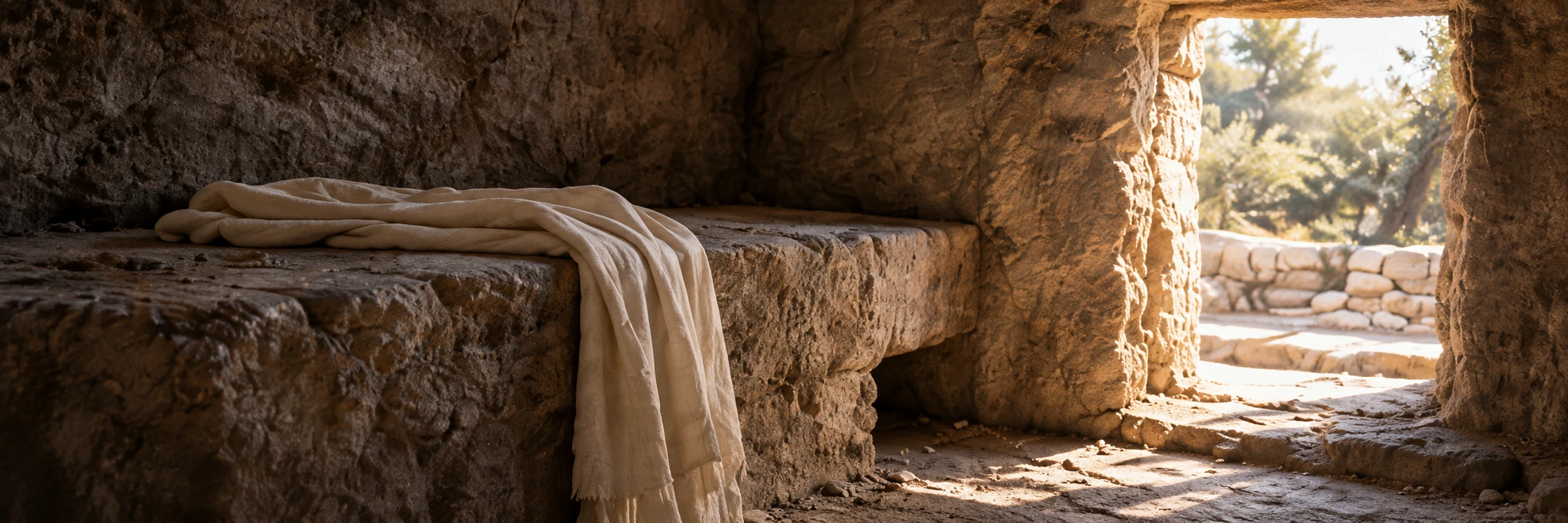
One morning. Four accounts.
Read each Gospel in its own words.
Mary Magdalene at the tomb
John 20:1–18
John begins with Mary arriving while it is still dark.
Follow her encounter, then compare the other accounts.
HISTORY & ARCHAEOLOGY
What can a tomb tell us?
Explore burial customs and the limits of the evidence.
ENCOUNTERS AFTER THE TOMB
Recognition. Doubt.
A new beginning.
Stay with the people in the story.
What do we know?
Separate the words of the texts, historical
context, and what remains uncertain.
What do the Gospels say?

The Gospels proclaim that Jesus rose from the dead. Their stories describe an empty tomb and the responses of his followers. Matthew, Luke and John also describe encounters with Jesus in the passages explored here. Mark 16:1–8 ends with the women leaving the tomb in fear. Read the accounts separately to hear each one's emphasis.
What can archaeology tell us?
Ancient tombs help us understand burial practices around Jerusalem. Rock-cut family tombs were costly; simpler graves were used by many poorer people. Scholars debate the shape of the stone described in Jesus' burial accounts. This context does not identify our illustrated tomb or establish what happened there.
Jodi Magness on burial context · Megan Sauter on the stone debate
Where do the accounts differ?
They differ in the visitors they name, the timing of arrival and the sequence of events. Matthew includes guards and an earthquake; Mark describes a young man in white; Luke describes two men in dazzling clothing; John describes Mary's later encounter with two angels and Jesus. Our comparison preserves those differences instead of blending them into one scene.
Read the story.
Leave room for wonder.

Ancient stories.
Modern minds.